Wolves in the Server Room: Someone Left the Gate Open (Again) in Asia

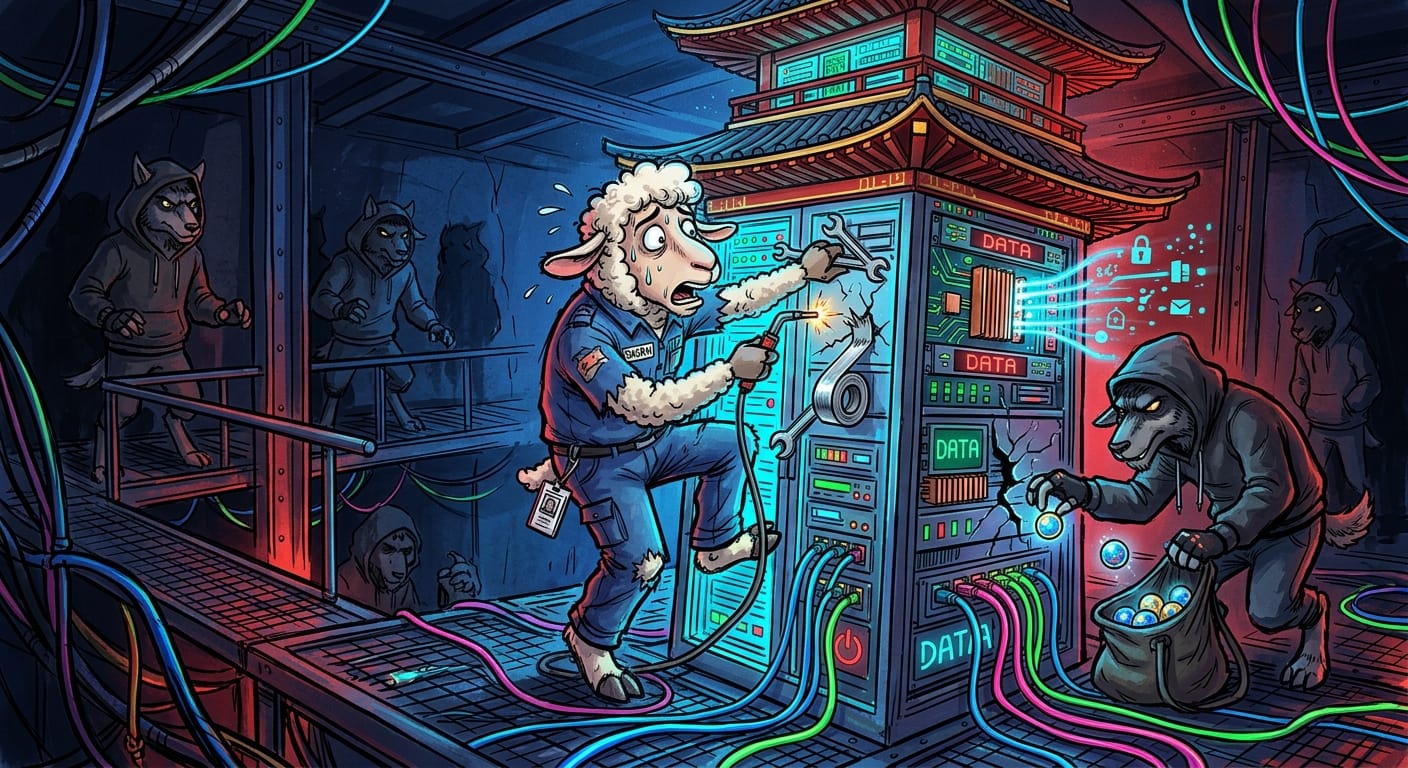
Oh good. A new threat cluster. Just what I needed at 3am when I'm already elbow-deep in a ticket about a printer that "smells funny."
Researchers have identified a fresh pack of wolves specifically targeting critical infrastructure across Asia. Aviation. Energy. Government. You know, the sectors where a bad day doesn't just mean a slow helpdesk queue, it means planes fall out of the sky or the lights go off for a country. No pressure.
The playbook here is depressingly familiar, which honestly makes it worse.
The wolves are getting in through vulnerable web servers. Unpatched, exposed, probably running software from an era when cargo pants were fashionable. Once they're through that hole in the fence, they drop Mimikatz, which if you don't know, is a credential-harvesting parasite that sucks up passwords and hashes like a tick on a warm afternoon. It's been around forever. The Shepherds have been warned about it forever. And yet.
The goal isn't smash-and-grab. This is long-term espionage. These wolves are not in a hurry. They're setting up camp, watching, waiting, and quietly hoovering up sensitive data while the flock grazes peacefully and clicks on fake grain emails about "invoice updates."
The threat cluster appears to be organized and patient, which is a combination I genuinely respect more than I respect most of my coworkers. Targeted, methodical, persistent. Meanwhile I can't get the Lambs to stop reusing "Password1" across seventeen systems.
The sectors hit are exactly the ones you'd want to hit if you were a nation-state looking to understand how a country moves, powers itself, and makes decisions. This has the fingerprints of strategic, state-aligned activity all over it. My fingerprints, by contrast, are mostly on an empty coffee mug.
Remediation
Look, I'm tired, so I'll keep this short.
Shear your web servers. If you have public-facing infrastructure running outdated software, you have a hole in the fence. Patch it. Now. Not next sprint. Now.
Hunt for Mimikatz indicators. Check for LSASS memory access, unusual credential dumping activity, and lateral movement that shouldn't be happening. Your SIEM should be screaming. If it isn't, your SIEM is also part of the problem.
Segment your network. The wolves got in through a web server. They should not then be able to waltz into your operational technology environment. The Electric Fence should have layers.
Audit privileged accounts. Assume credentials are already compromised. Rotate. Enforce MFA. Cry a little. Rotate again.
Log everything. These wolves are patient. Your only advantage is visibility.
Go check your servers. I'll be here, filing tickets into the void.
Original Report: https://thehackernews.com/2026/03/web-server-exploits-and-mimikatz-used.html